
How South Beloit schools are slashing the cost of college
675 college credits at no cost to families essentially injects money back into the pockets of local parents.

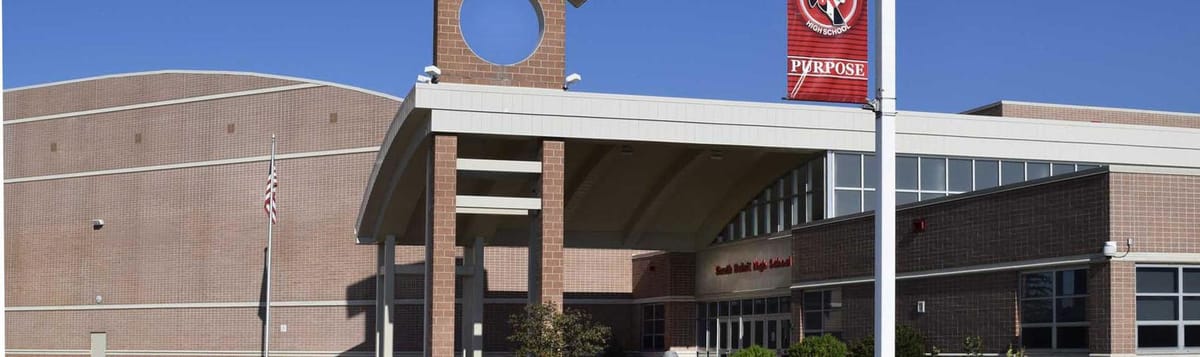
As the national conversation around student loan debt reaches a fever pitch ($1.83 trillion as of May 2026), the South Beloit School District is quietly providing a massive financial windfall for local families. Through an aggressive expansion of College and Career Readiness (CCR) programs, the district has enabled students to earn hundreds of college credits before they even cross the graduation stage—resulting in a staggering $330,000 in potential savings for the community.
Students in other districts, such as Hononegah, are seeing similar benefits.
Recent data from the South Beloit district reported at the May 12 school board meeting revealed that students are bypassing the traditional "debt-first" college model by utilizing dual-credit partnerships with Blackhawk Technical College (BTC) and Rock Valley College (RVC).
This year alone, South Beloit students earned a total of 675 college credits. When broken down by program, the scale of the achievement becomes clear:
- In-House Dual Credit: Students earned 285 credits directly within high school classrooms.
- Trades in Training: 170 credits were earned through specialized vocational tracks at BTC.
- RVC Running Start: High-achieving students earned 220 credits while attending Rock Valley College full-time.
At current tuition and fee rates, these programs represent over $107,000 in immediate savings compared to paying out-of-pocket at a community college. However, for families planning on their child transferring to a four-year university, that value triples to over $330,000, based on average public university tuition rates.
This CCR program is not a "gifted and talented" program. It is open to students who adhere to attendance, disciplinary, and academic standards. It's the product of student grit. And that grit becomes a wealth-building tool. By reducing the "Time to Degree," these programs allow students to enter the high-wage workforce 1–2 years earlier. WCNC, a NBC news affiliate in Charlotte, reported that 2 extra years of college could cost up to an extra $300,000, calculating not only tuition and room and board, but also including opportunity costs and missing out on compound interest.
In fact, three Sobo graduates will receive an associates degree along with their high school diploma on Saturday, May 16, 2026. According to Emily Roer and Dr. Jeremy Schaaf at South Beloit High School, "if our students stay on the dual credit track throughout their time here at SBHS (Sophomore-Senior), they typically come in with a year and a half done."
The savings don't stop at the bursar’s office. The district’s commitment to these programs typically includes covering the cost of textbooks and lab fees—expenses that average roughly $27,000 for a credit load of this size.
For many students, the "Trades in Training" program at BTC is a direct pipeline to high-wage employment. By earning specialized credentials while still in high school, students can enter fields like advanced manufacturing, nursing, or HVAC at age 18, debt-free.
For those heading to a four-year university, the 675 credits earned represent roughly 22 full-time semesters of college. This allows students to graduate a semester or even a full year early, moving them into the workforce faster and saving parents the rising costs of room and board.
While the cost of higher education continues to climb, South Beloit is proving that the "SoBo Advantage" is rooted in fiscal pragmatism. By leveraging regional partnerships with BTC and RVC, the district is ensuring that for South Beloit graduates, the diploma comes with more than just a sense of pride—it comes with a massive head start on the American Dream.