
Clean water, clear answers: how Rockton and UIC are solving the PFAS puzzle
Village of Rockton and University of Illinois-Chicago team up to reduce risk to PFAS exposure


As concerns over "forever chemicals" grow nationwide, the Village of Rockton is becoming a focal point for cutting-edge environmental research. A new partnership between the University of Illinois Chicago (UIC), the University of Illinois Urbana-Champaign (UIUC), and local officials is aiming to bridge the gap between complex science and community safety regarding PFAS contamination.
The collaboration is part of a federally funded Superfund Research Program (SRP), supported by the National Institute of Environmental Health Sciences (NIEHS). The program is designed to help communities near superfund sites—like the Beloit Corp site in Rockton—address hazardous contaminants and improve public health outcomes.
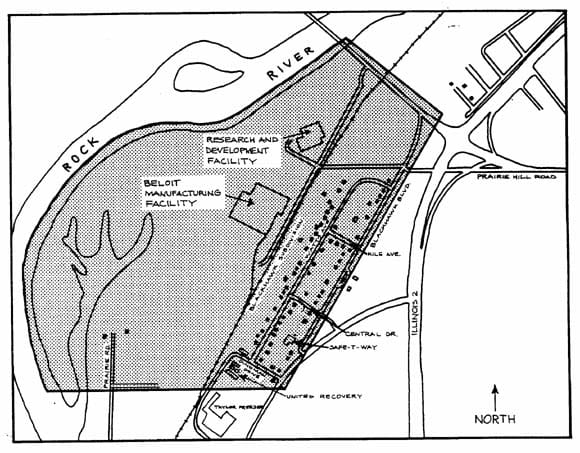
From 1957 until 1999, Beloit Corp manufactured paper-making equipment on the site and operated a research center on the property. The manufacturing activities resulted in contaminating soil and area groundwater according to the Illinois Environmental Protection Agency.
According to Dr. Susan Buchanan, a Clinical Associate Professor at the UIC School of Public Health and the director of the Great Lakes Center for Children’s and Reproductive Environmental Health, the relationship began when researchers searched for a community that could benefit from proactive scientific engagement.

"Rockton and the Beloit Corp superfund site seemed like an ideal community that was impacted by PFAS," Dr. Buchanan said. "After meeting with [Mayor] John Peterson and community members like Evan Schoepski, we were impressed with the eagerness to learn how to reduce risk from exposure."
While the Village manages the technical installation and monitoring of the municipal water system’s filtration upgrades, the university team is focusing on the human element: understanding exactly how these chemicals affect the residents of Rockton.
Understanding the Risks
PFAS (per- and polyfluoroalkyl substances) are notoriously difficult to track because their use is so widespread in industrial and consumer products. In Rockton, municipal water has previously shown levels around 12 parts per trillion (ppt). While that number may seem small, health experts warn that the persistent nature of these chemicals requires a "goal of zero" exposure.
Dr. Buchanan noted that a large body of science links long-term PFAS exposure to several serious health issues, including:
- Cancers: Increased risk of kidney, testicular, and breast cancer.
- Developmental & Reproductive Issues: Low birth weight and pre-eclampsia (high blood pressure during pregnancy).
- Systemic Health: Thyroid dysfunction, high cholesterol, and ulcerative colitis.
- Immune Response: A decreased antibody response to vaccines.
"It is important to remember that these health outcomes occur in a very small minority of people," Dr. Buchanan clarified, "which means our individual chances of these health outcomes is very low. On the other hand, especially with cancer, there is no safe level of PFAS chemicals."
Beyond the Tap
The university's role goes beyond just looking at the kitchen sink. The research team plans to work with residents to identify other potential sources of exposure, such as private wells, local schools, daycare facilities, and even home gardens or locally caught fish.
Future initiatives include educating local healthcare providers on PFAS-related risks and providing evidence-based data on which home water filters are most effective at removing the contaminants.
Looking Ahead
While a project of this scale—funded by the federal government—can take years to fully develop and fund, the UIC team says they aren't waiting to get to work.
"In the meantime, we intend to hold more meetings and start to address community concerns," Dr. Buchanan said. "Our goal is to help residents understand the potential exposure to PFAS from multiple sources and how they can mitigate risk."
Residents interested in the technical specifics of the new municipal filter system or current water quality readings are encouraged to contact Mayor Peterson’s office for the latest monitoring values.
The Rockton-Roscoe News has covered other cleanup efforts before and is looking forward to seeing the new filtration system being installed at the Rockton municipal water facility.